Neueste Nachrichten

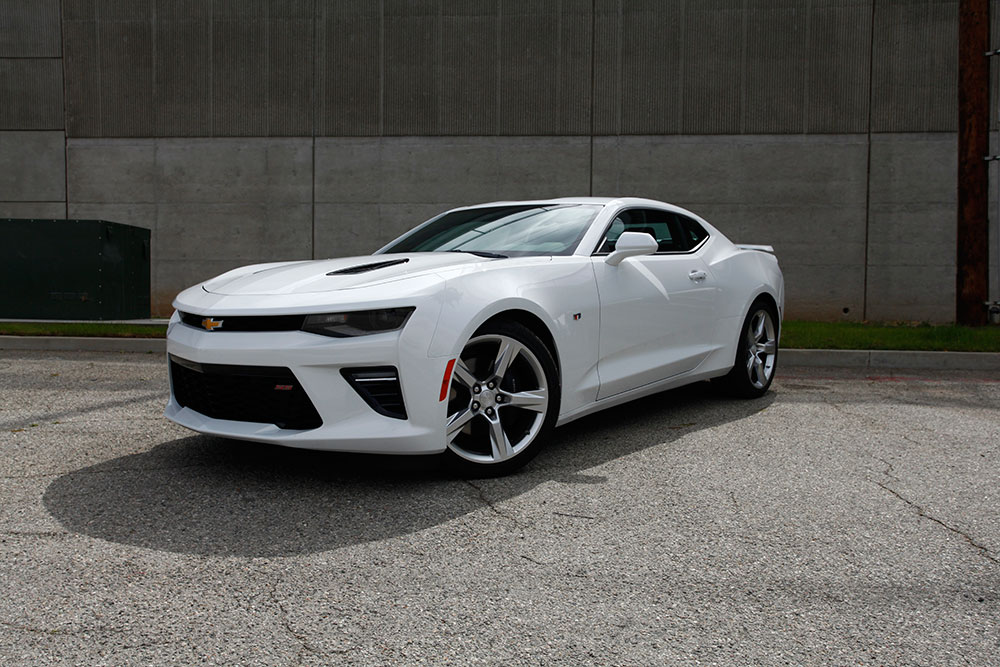
2016 Chevrolet Camaro SS Air Filter Delivers Reusable High-Flow Performance

Caption

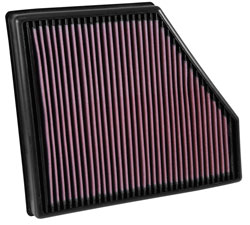
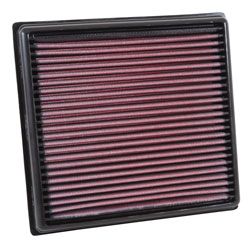
The K&N 33-5047 replacement air filter is washable and reusable and will be the last air filter you will ever buy.

Perhaps the embodiment of the muscle cars of the 1960s is the Chevrolet Camaro. First introduced on September 29, 1966 for the 1967 model year, it was designed to be Chevrolet's answer to the Ford Mustang; the original model shared its platform and major components with the Pontiac Firebird, which was introduced the same year.

Caption

The K&N 33-5047 replacement air filter integrates with the OEM vehicle electronics and will not void the vehicle warranty.

The Camaro went through four generations during the next 35 years, was discontinued in 2002 and re-introduced first as a concept car and then as a street model in March 2009.

The first Camaro was available as a two-door coupe and convertible. Buyers were given a choice of three engines –- a 230 cubic inch (3.8-liter), a 250 cubic inch (4.1-liter) inline-6 or a 302 cubic inch (4.9-liter), a 307 cubic inch (5.0-liter), a 327 cubic inch (5.4-liter), a 350 cubic inch (5.7-liter) a 396 cubic inch (6.5-liter) or a 427 cubic inch (7.0-liter) V8 engine. The first generation Camaro continued on into the 1969 model year and was the inspiration for the design of the retro fifth-generation Camaro that debuted in 2009. During the first generation run between 1967 and 1969, Chevrolet introduced four editions of the car –- a standard, Super Sport (SS), Rally Sport, and the Z/28.

The second generation Camaro debuted in 1970 and was produced through the 1981 model year. The car featured unibody construction, front subframe, an A-arm front suspension, and leaf springs to keep the solid rear axle under control. The staff at Road & Track selected the 1971 SS350 as one of the 10 best cars in the world in an edition of the magazine that broke in August 1971. The SS package was discontinued in 1972 and reintroduced in 1996. The 1980 and 1981 Z28 included an air induction hood scoop.

The run for the third generation Camaro was from 1982 through 1992. The car included fuel injection, Turbo-Hydramatic 700R4 four-speed automatic transmission or a five speed manual transmission and a standard OHV 4-cylinder engine. Besides the coupe, there was also a hatchback model. This incarnation was 500 pounds lighter than the second-generation model. In addition, the IROC-Z (which stands for International Race of Champions) was added to the stable in 1985 and lasted through 1990. In 1985, Chevrolet paired the Camaro with a 305 block V8 with turned port injection (TPI) and in 1987 a 350 cubic inch (5.7-liter) V8 engine was available as an option to power the IROC-Z with an automatic transmission.

Chevrolet celebrated the 20th anniversary of the Camaro with two special editions – the 20th Anniversary Commemorative Edition in 1987 and the 25th Anniversary Heritage Package in 1992. The Heritage Package was powered by a 305 cubic inch (5.0-liter) High Output engine.

A police version of the Camaro, a combination of the Z28 and the RS, was unveiled in 1991.

The fourth generation of the Camaro first appeared in 1993 and ran through 2002. It was basically the same car as the first model that was introduced in 1967. It included rear-wheel drive, pushrod 6-cylinder V8 engines. In addition, from 1993 through 1995 the car was also powered by a 3.4-liter V6. A 3.8-liter V6 was debuted in 1995. A 350 MPFI (LT1) small block V-8 engine from the 1992 Corvette also powered the standard Z28.

The fifth generation Camaro covered the years of 2009 through 2015. It was totally redesigned based on the 2006 Camaro Concept and 2007 Camaro Convertible Concept and was approved for production in August 2006. GM Holden in Australia directed the creation of the final design and performed engineering and development of the car because it had been instrumental in the development of the Zeta Architecture and was General Motors' global center for Rear-wheel drive development. The standard coupe, the LS, LT, and SS were the available models. A 3.6-liter (220 cubic inch) V6 powered the LS and LT and generated 312-horsepower. The SS gets its power from a 6.2-liter (376 cubic inch) LS3 V8 that produced 426 horsepower. The automatic version of the SS featured the L99 V8 that generated 400-horsepower. In April 2010 the Camaro was selected the World Car Design of the Year at the World Car of the Year Awards.

The sixth generation Camaro was introduced in 2016 and was available in an LT and SS model. There are three engine available to power the vehicle –- a 2.0-liter turbocharged inline 4 that produces 275-horsepower, a 3.6-liter V6 that offers 344-horsepower, and a 6.2-liter LTI V8 that supplies 455-horsepower powers the SS model.

The Camaro has competed in the SCCA-sanctioned Trans-Am Series, the NASCAR Xfinity Series and was the official car of the International Race of Champions from 1975 until 1989. It is also a favorite of drag racers and has won several championships and is competing in series sponsored by the National Hot Rod Association, International Hot Rod Association, the United States Hot Rod Association, the Sports Car Club of America, the IMSA GT Series of the Grand Am Road Racing Championship, and the Swedish Camaro Cup

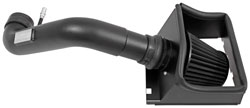
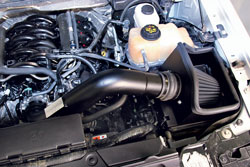
It would surely be ashamed if you owned a 2016 Chevrolet Camaro SS with a 6.2-liter V8 engine and not protect it with the best replacement air filter around –- the K&N 33-5047 replacement air filter.

The filter is designed to boost horsepower and acceleration, works with the OEM vehicle electronics, lasts for up to 50,000 miles and is washable and reusable. In fact, it could end up being the last air filter you will ever need to buy for your 2016 Camaro SS.

The filter performance is impeccable because of its design. It features four layers of cotton gauze media that lies between two aluminum wire screens. The cotton media is treated with a special grade of filter oil that is so tacky it catches and holds impurities that could damage your engine.

K&N also offers an air filter cleaning kit that restores its original performance capabilities in just seven easy steps in about 90 minutes. K&N is so sure of the performance of its air filters it backs them with a Million Mile Limited Warranty.

Nothing has been left to chance in the development of the filter. The Society of Automotive Engineers developed the standards under which the air filter is tested and K&N's own in-house lab tests each filter

The K&N 33-5047 air filter is specifically designed for the 2016 Chevrolet Camaro SS with a 6.2-liter V8 engine.

You can view all the air intakes that K&N makes for the Chevrolet Camaro SS at the Air Intake Systems for the Chevrolet Camaro SS page and all the air filters that K&N makes for the Chevrolet Camaro SS at the Air Filters for the Chevrolet Camaro SS page. You can view all the K&N performance products for any vehicle by using the Search by Vehicle tool and you can find a local K&N retailer by plugging your location into the K&N Dealer Search as well.

clear

K&N PRODUCT SEARCH     WHERE TO BUY K&N

clear

2014-2016 Vauxhall-Opel Corsa Air Filter Offers Exceptional Airflow and Filtration

K&N 33-3040 replacement air filter for Vauxhall Corsa Mk IV and Opel Corsa E

The K&N 33-3040 replacement air filter features unique construction that ensures that impurities are captured before they can get to and damage the engine.

The Corsa was released under two nameplates –- Opel and Vauxhall. Manufactured by Opel, the Opel Corsa debuted in 1982 and the Vauxhall Corsa made its first appearance as the Vauxhall Nova in 1983, with the name change to Corsa occurring with the introduction of the Corsa B in 1993. The Nova was available in the United Kingdom and replaced the Vauxhall Chevette.

The Corsa A was available in two body styles –- a three and five-door hatchback and a two and four door sedan and was available from 1982 through 1993.

20 different gasoline engines powered the Corsa A through the years including a 1.0-liter, seven 1.2-liters, five 1.3-liters, three 1.4-liters, and four 1.6-liter I4s, a 1.5-liter I4 diesel, and a 1.5-liter I4 turbodiesel.

A 1.0-liter engine that generated 45-horsepower, a 1.2-liter engine that produced 55-horsepower, a 1.3-liter engine that delivered 70-horsepower, and a 1.4 liter engine that supplied 75-horsepower powered the first generation models from 1982 through 1993. The first engines included carburetors and fuel injection was introduced in 1987. The engines were ultimately based on the OHV unit from Kadett. The car also used Isuzu-built diesel engines that were also used in the Isuzu Gemini.

11 different gasoline engines including a 1.0-liter I3; and four 1.2-liter, four 1.4-liter, two 1.6-liter I4s, and a 1.5-liter Isuzu I4 diesel, a 1.5-liter Isuzu I4 turbodiesel, and a 1.7-liter Isuzu I4 diesel powered the Corsa B from 1993 through 2000. The car also featured one of three transmissions –- a 4 and 5-speed manual and a 4-speed automatic. The car was available as a hatchback only in the world market. However, a sedan version was manufactured in Brazil and sold in Latin American market as the Chevrolet Corsa Classic until 2010. It also appeared in South Africa and India. An estate car style was sold in some European markets including Italy as an Opel. Sedan and estate versions were also sold in China and hatchback, sedan, and estate styled cars were available in India. A three and 5-door hatchback with manual or automatic transmissions were also available in Thailand.

12 engines were used to power the Corsa C, which was produced in Europe from 2000 through 2006 and in South America from 2002 through 2012. The gasoline engines included two 1.0-liter I3, two 1.2-liter I4s, three 1.4-liter I4s, and a 1.8-liter I4. There were three 1.7-liter I4 diesel engines. There were three transmissions available –- a 5-speed manual, 4-speed automatic, and a 5-speed semi-automatic.

The car came in four body styles -- a 3- and 5-door hatchback, a 4-door sedan, a 3-door car derived van and a 2-door coupe utility pickup.

Eight engines powered the Corsa D, which was manufactured from 2006 through 2014. The gas engines included a 998 cc I3 that generated 59-horsepower (60 PS) at 5600 rpm and 65 lb-ft (88 N-m) torque at 3800 rpm, a 1229 cc I4 that delivered 79-horsepower (80 PS) at 5600 rpm and 81 lb-ft (110 N-m) of torque at 4400 rpm, a 1364 cc I4 that supplied 89-horsepower (90 PS) at 5600 rpm and 92 lb-ft (125 N-m) of torque at 4000 rpm, a 1598 cc I4 that offered 148-horsepower (150 PS) and 155 lb-ft (210 N-m) of torque at 1850-5000 rpm, and another 1598 cc I4 that generated 189-horsepower (192 PS) and 170 lb-ft (230 N-m) of torque at 1980-5800 rpm.

There were three diesel engines available including a 1,248 cc I4 that generated 74-horsepower (75 PS) at 4000 rpm and 125 lb-ft (170 N-m) of torque at 1750-2500 rpm, a second 1,248 cc I4 that delivered 89-horsepower (90 PS) at 4000 rpm and 148 lb-ft (200 N-m) of torque at 1750-2500 rpm, and a 1,686 cc I4 that supplied 123-horsepower (125 PS) at 4000 rpm and 207 lb-ft (280 N-m) of torque at 2300 rpm.

Four transmissions were offered for the Corsa D –- a 5- and 6-speed manual, a 4-speed automatic, and a 6-speed semi-automatic.

General Motors, Opel and Fiat co-partnered to develop the car. It was available in a three- and five-door hatchback.

What Car, an automotive magazine published in the UK, awarded it the 2007 Car of the Year.

Five engines are available to power the Corsa E, manufactured in 2014 to the present. Gasoline engines available include two 999 cc I3 that generates 89-horsepower (90 PS) ad 3700-6000 rpm and 113-horsepower (115 PS) AT 5000-6000 rpm with 125 lb-ft (170 N-m) of torque at 1800-3700 rpm and 125 lb-ft (170 N-m) of torque at 1800-4500 rpm; two 1229 cc that delivers 69-horsepower (70 PS) AT 5600 rpm with 96 lb-ft (130 N-m) of torque at 4000 rpm and 89-horsepower (90 PS) at 6000 rpm with 85-lb-ft (115 N-m) of torque at 4000 rpm; a 1364 cc that supplies 99-horsepower (100) PS at 3500-6000 rpm with 148 lb-ft (200 N-m) of torque at 1850-3500 rpm; and 1598 cc that produces 204-horsepower (207 PS) at 5850 rpm with 181 lb-ft (245 N-m) of torque at 1900-5800 and an overboost of 207 (280).

There are two 1,248 cc diesel engines – one delivers 74-horsepower (75 PS) at 3750 rpm with 140 lb-ft (190 N-m) of torque at 1500-2500 rpm and the other generating 94-horsepower (95 PS) at 3750 rpm with 140 lb-ft (190 N-m) of torque at 1500-2500 rpm.

Between 1993 and 2009 more than 1,371,573 Vauxhall Corsas were sold in the UK.

Owners of a 2014-2016 Vauxhall or Opel Corsa can rely on the K&N 33-3040 replacement air filter to protect the engine of their car. The filter is designed to drop into the existing factory air box, is designed to increase the horsepower and acceleration and will integrate with OEM electronics. It will not void the vehicle warranty.

The air filter lasts for up to 50,000 miles because it features four layers of cotton gauze media placed between two aluminum wire screens. The cotton media is treated with a special grade of filter oil that is so tacky it will capture and hold impurities that could damage your engine. Yet it permits high volumes of airflow.

The filter is washable after 50,000 miles and can be reused for another 50,000 miles until the next cleaning. It can be cleaned over and over again and reused; making the filter the last you will ever have to buy.

K&N also offers an air filter cleaning kit that can be used to cleanse the filter in just seven easy steps in about 90 minutes.

Independent labs have tested the filter under the most stringent standards. Moreover, Carl Judice, a resident of New Iberia, Louisiana, had a K&N replacement air filter in his three-quarter ton Chevrolet pickup when he drove for more than one million miles. Judice reports that he has never had to rebuild the engine or replace the cylinder head of the truck.

K&N is so sure about the quality of their filters, they back them with a unique Million Mile Limited Warranty®.

The K&N 33-3040 replacement air filter is designed for the following vehicles:

2016 VAUXHALL CORSA MK IV 1.6L L4
2016 VAUXHALL CORSA MK IV 1.4L L4
2016 VAUXHALL CORSA MK IV 1.3L L4 Diesel
2016 VAUXHALL CORSA MK IV 1.2L L4
2016 OPEL CORSA E 1.6L L4
2016 OPEL CORSA E 1.4L L4
2016 OPEL CORSA E 1.3L L4 Diesel
2016 OPEL CORSA E 1.2L L4
2016 OPEL CORSA E 1.0L L3
2015 VAUXHALL CORSA MK IV 1.6L L4
2015 VAUXHALL CORSA MK IV 1.4L L4
2015 VAUXHALL CORSA MK IV 1.3L L4 Diesel
2015 VAUXHALL CORSA MK IV 1.2L L4
2015 OPEL CORSA E 1.6L L4
2015 OPEL CORSA E 1.4L L4
2015 OPEL CORSA E 1.3L L4 Diesel
2015 OPEL CORSA E 1.2L L4
2015 OPEL CORSA E 1.0L L3
2014 VAUXHALL CORSA MK IV 1.4L L4
2014 VAUXHALL CORSA MK IV 1.3L L4 Diesel
2014 VAUXHALL CORSA MK IV 1.2L L4
2014 OPEL CORSA E 1.4L L4
2014 OPEL CORSA E 1.3L L4 Diesel
2014 OPEL CORSA E 1.2L L4
2014 OPEL CORSA E 1.0L L3

You can view all the air filters that K&N makes for these vehicles at the Air Filters for the Vauxhall Corsa Mk IV page and Air Filters for the Opel Corsa E page. You can view all the K&N performance products for any vehicle by using the Search by Vehicle tool and you can find a local K&N retailer by plugging your location into the K&N Dealer Search as well.

clear

K&N PRODUCT SEARCH     WHERE TO BUY K&N

clear

Justin Haley wins second NASCAR K&N Pro Series East race at Columbus Motor Speedway

Justin Haley won the NASCAR K&N Pro Series East NAPA 150 at Columbus Motor Speedway in Ohio

Justin Haley led the first 109 laps and won the NASCAR K&N Pro Series East NAPA 150 at Columbus Motor Speedway in Ohio.

Justin Haley won his second NASCAR K&N Pro Series East race of the season and had his second epic battle with NASCAR Next driver Kyle Benjamin. Haley won the pole and led the first 109 laps of the NAPA 150 at Columbus Motor Speedway in Ohio. Benjamin passed Haley on lap 110 and held the lead for 25 laps.

Justin Haley won the NASCAR K&N Pro Series East NAPA 150 at Columbus Motor Speedway in Ohio

Justin Haley won the NASCAR K&N Pro Series East race at Columbus Motor Speedway. He has won two K&N Pro Series races this season.

But Benjamin cut a tire on lap 134 leaving the door open for Haley. He regained the lead and was out front for the final 15 laps of the race.

"Last year there was so much bad luck in my racing career," Haley said after the race. "I never thought it would turn around. It's definitely cool to be on the lucky side tonight."

Justin Haley won the NASCAR K&N Pro Series East NAPA 150 at Columbus Motor Speedway in Ohio

Justin Haley led 125 laps of the NASCAR K&N Pro Series East NAPA 150 and won the race.

The two drivers had a similar battle at Greenville Pickens Speedway in South Carolina in March. Benjamin won the pole and led the first 54 laps of the race. The two battled for the lead, with Benjamin leading for 122 of the 150 laps. But Haley took the lead on lap 143 and held off Benjamin over the last seven laps of the race.

In the race at Columbus Speedway, Benjamin returned to the track after repairing his tire, but he didn't pose a threat to Haley's lead. Benjamin fell back in the pack and crossed the finish line in 11th place.

Austin Theriault finished in second place, followed by Collin Cabre in third. It was Theriault's fourth top-five finish in eight races.

Columbus Motor Speedway, Justin Haley leads the NASCAR K&N Pro Series East

By winning the NAPA 150 at Columbus Motor Speedway, Justin Haley leads the NASCAR K&N Pro Series East standings by 40 points over Noah Gragson.

"It was overall a good weekend," Theriault said. "We were strong in practice, strong in qualifying, and decent in the race. I think the 5 (Haley) and the 40 (Benjamin) had a little bit more in restarts after about five laps, it was hard to overcome."

Cabre, who started the race in 16th, posted his first podium and first top-five finish of the K&N Pro Series East season.

Justin Haley won the pole and the NASCAR K&N Pro Series East race at Columbus Motor Speedway

Justin Haley won the pole and the NASCAR K&N Pro Series East race at Columbus Motor Speedway. He has won two of the eight K&N Pro Series East races this season.

"It was a rough one for sure," Cabre said. "Everyone was kind of beating and banging there. The leaders got away from us. That first segment we just tried to stay on the lead lap, pretty much ride and just save our stuff. We ended up with a finish we didn't quite expect from where we qualified. We're close. Just got to get the qualifying a little better."

K&N Pro Series East rookie Harrison Burton was fourth. Noah Gragson was fifth.

Haley is the first driver to win two K&N Pro Series East races this season. He also extended his lead in the K&N Pro Series East standings to 40 points over Gragson.

"We didn't have the best car tonight, Benjamin was a little faster than us," Haley said. "Fortunately luck played in our favor. We expanded our points lead and had an overall good night."

The next NASCAR K&N Pro Series East race is the United Site Services 70 at New Hampshire Motor Speedway on July 16.

clear

K&N PRODUCT SEARCH     WHERE TO BUY K&N

clear

RJ Anderson Promotes UTVs at Lucas Off-Road Racing Series, WORCS, SCORE, BITD, and Terracross

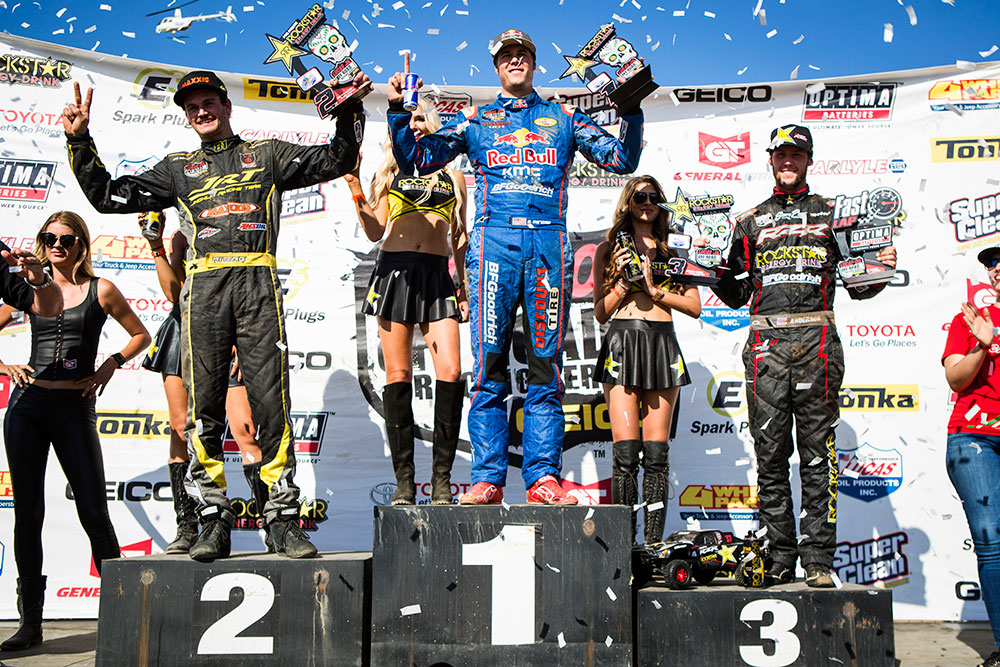
RJ Anderson wins first place at  Lucas Off-Road Racing Series Round 8 at Estero Beach, Baja California

RJ Anderson stands on the first place step at the podium after winning the race and fast lap award at the Lucas Off-Road Racing Series Round 8 at Estero Beach, Baja California.

Most racers credit the fact that their dads raced when asked why they got into racing. Twenty-three year old R.J. Anderson of Riverside, California acknowledges that it was his dad and the work he does that got him involved in racing UTVs.

A UTV, or side-by-side, is a four-wheel vehicle like an ATV, but it can seat two or more passengers and features all-around protection while an ATV can usually only accommodate one rider and has no cage or protective shell.

Anderson became familiar with the machines because his father owns Walker Evans Racing, which manufactures wheels and suspension products for trucks and UTVs.

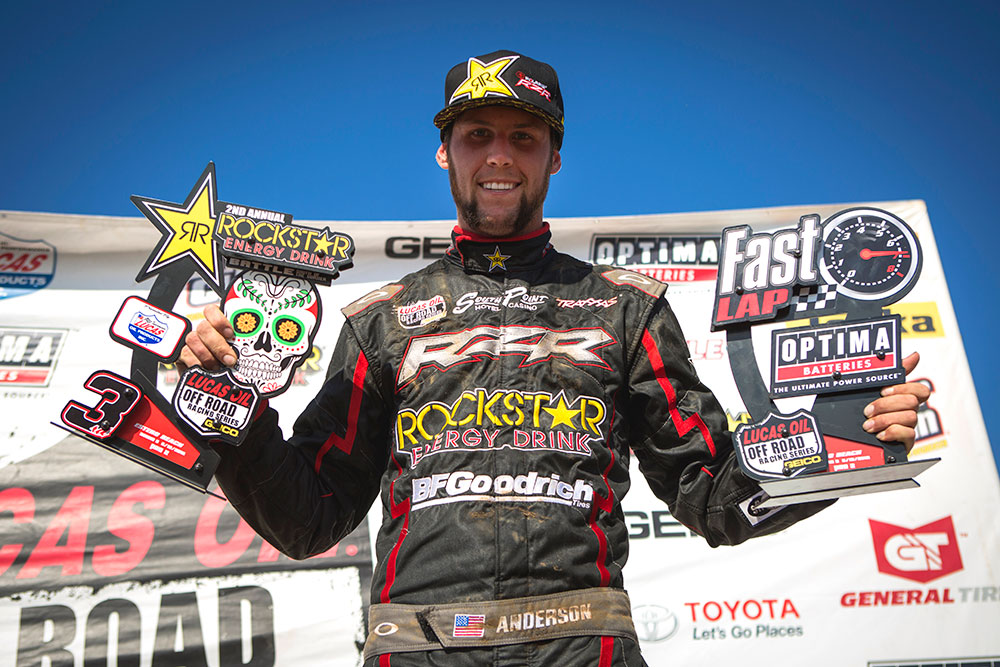
RJ Anderson wins first place at  Lucas Off-Road Racing Series Round 8 at Estero Beach, Baja California

Anderson holds the winner's and fast lap awards after the round 8 Lucas Off-Road Racing Series Round 8 event at Estero Beach, Baja California.

"In 2009 when UTVs first started to appear, my dad was making suspension products for them and I would test them out," explained Anderson. "After awhile I got into racing UTVs." He got a hold of a Polaris RZR UTV and hit the tracks.

"I wasn't that serious about it at first," he continued. "Racing UTVs started on the West Coast, which was nice for me and it was something I could do that was fun. After I started doing well, I attracted support from Polaris and once I got factory support, it turned into more of a job."

Anderson races in the Lucas Oil Off-Road Racing Series, WORCS, SCORE, BITD, and Terracross.

In 2013 he won the Baja 1000 and after he turned pro in 2015 he won his first Pro2 race in Estero Beach, Mexico.

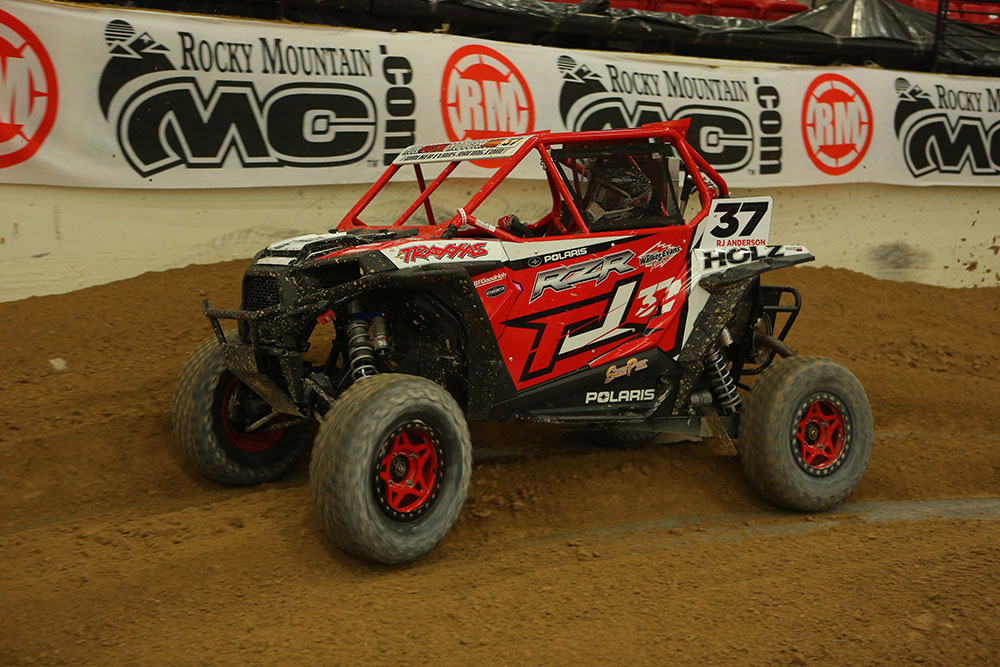
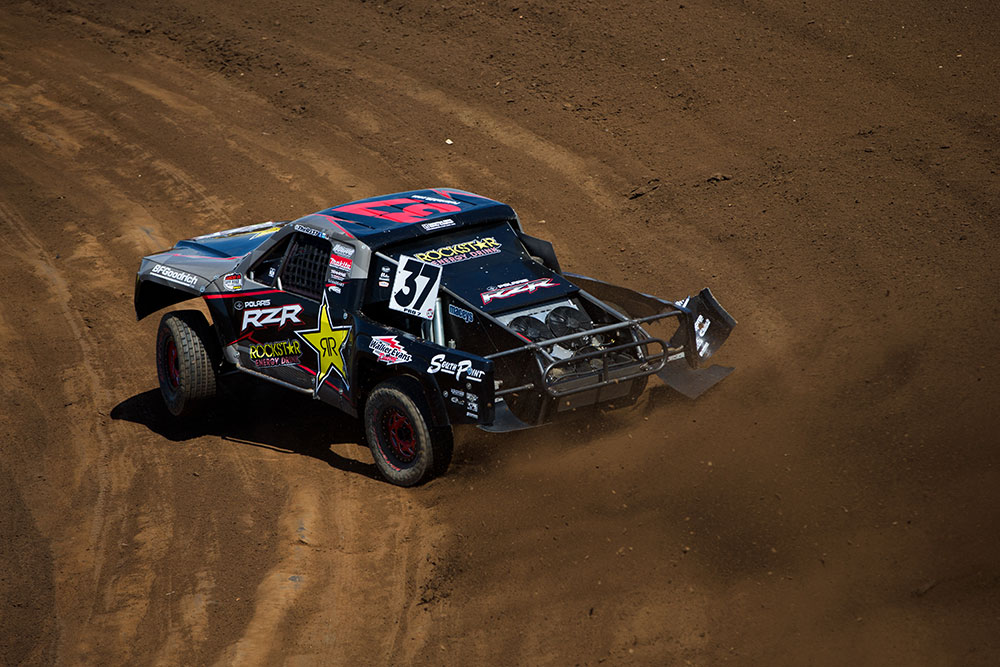
RJ Anderson in his #37 UTV at  Lucas Off-Road Racing Series Round 8 at Estero Beach, Baja California

Anderson sits behind the wheel as he guides the #37 UTV during a recent race.

His career victories and honors include:

  • Five off-road racing championships
  • 46 career Lucas Oil and WORCS racing victories
  • More than 100 combined career podiums in Lucas Oil, Score, BITD, Terracross, and WORCS
  • 2015 Off-Road Hall Of Fame – Short Course Rising Star
  • 2015 Lucas Oil ProLite Champion
  • 2014 Lucas Oil Pro 2 Rookie of the Year
  • 2013 Baja 1000 1900 (Pro UTV) Champion
  • 2013 Terracross RZR 1000 Pro Champion
  • 2012 Lucas Oil ProLite Champion
  • 2012 DirtSports Short Course Driver of the Year
  • 2012 Lucas Oil Off Road Driver of the Year
  • 2011 Torc ProLite Rookie of the Year

He raced for his dad's Walker Evans Racing team. He started his own racing Team, RJ37 racing, in 2014. He, his brother, and a cousin race for the team.

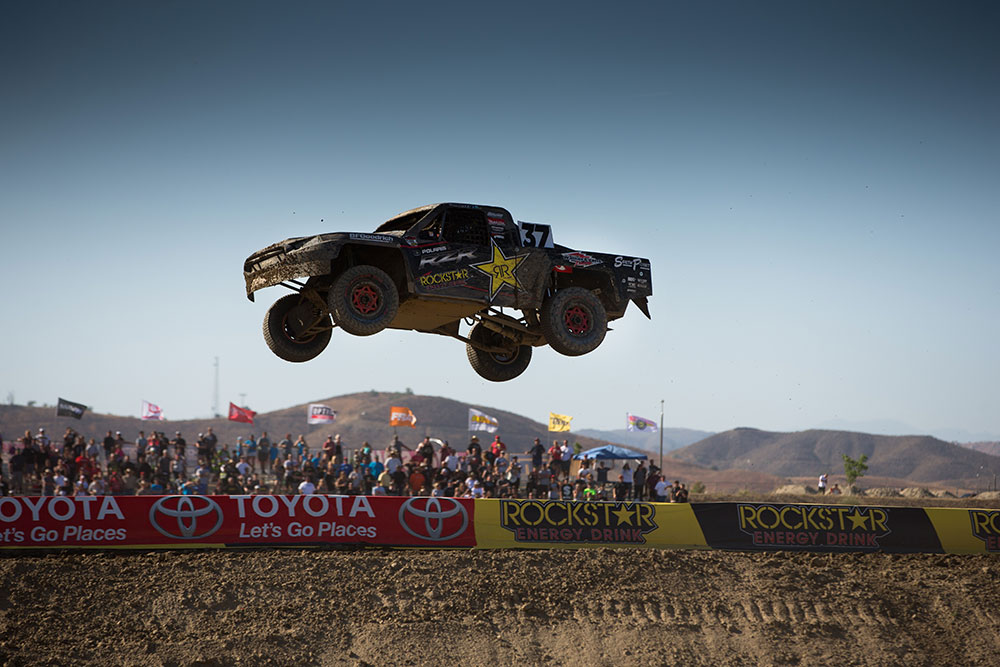
RJ Anderson getting air at Lucas Off-Road Racing Series Round 8 at Estero Beach, Baja California

RJ Anderson takes to the air during a lap in the Lucas Off-Road Racing Series Round Three event.

K&N Engineering has been sponsoring him since 2010.

"Back in the day I was racing at a local track and after I won a race a K&N representative approached and said K&N wanted to help me out. I have been using their air filters on everything I race and they have been a huge supporter for me and for UTV racing," said Anderson.

His other sponsors include Polaris, Rockstar Energy, Walker Evans Racing, South Point Casino, B.F. Goodrich, Traxxas, Loan Mart, Impact, Holz Racing Products, FK Rod Ends, Makita, Eibach Springs, UTVUnderground.com, Kroyer, Rugged Radios, Active Screen Printing, and Oakley.

He has done a number of videos for UTVUnderground.com, a media network that promotes UTV racing. He is currently doing a video series for Polaris titled The Boss. – RJ37 Series Presented By Polaris RZR. The series started filming in 2014 and covers the progress of Anderson and his team. Episodes include how he started his team, how he got into racing, how to make a team better, winning his first race as a team owner, what it takes to be an off-road racer, and the partnership he has formed with Polaris.

RJ Anderson racing Polaris UTV at Lucas Off-Road Racing Series Round 7

Anderson 's Polaris UTV kicks up dirt during the Lucas Off-Road Racing Series Round Seven event.

"We have been developing content for two and a half years and it was released this year," said Anderson. "The purpose is to promote me and Polaris, but each episode could be used to teach potential racers how to get involved in the sport. Three episodes have been filmed so far with another three to be done this year for a total of six."

The series is displayed on Anderson's racing team website RJ37, on UTVUnderground.com, and on Youtube. In addition, a video of Anderson breaking the record for the longest jump by a UTV in August 2013 as well as other RJ Anderson clips also appears on Youtube. The longest jump video shows Anderson racing through an abandoned iron mine complex in the Colorado Desert in California on his modified 2014 Polaris RZR XP1K.

According to Anderson, half the WORCS and Lucas Oil Series races have been run and he has competed in a total of 15 races so far this year. Currently, he is third in points in the Pro2 Class in the Lucas Oil Off-Road Racing Series.

Anderson plans to compete in these remaining races:

Lucas Oil Off-Road Racing Series

  • July 23-24 Glen Helen Raceway, Devore, CA
  • August 13-14 Wild West Motorsports Park, Sparks, NV
  • September 23-24 Lake Elsinore Motorsports Park, Lake Elsinore, CA
  • October 22-23 Wild Horse Pass Motorsports Park, Chandler, AZ.

Remaining Schedule for WORCS 2016:

  • September 16-17 Round 8 Glen Helen Devore, CA

He is bullish about UTV racing. "UTV racing is growing. The products are getting better and better and the field is getting bigger every year. The future of UTV racing is very bright," Anderson concluded.

clear

K&N PRODUCT SEARCH     WHERE TO BUY K&N

clear

1995 Lincoln Town Car Cartier Transformed into a 1934 Ford by Ruben Contreras

custom lowered 1934 Ford

The project resulted in a custom 1934 Ford with a total length of 199-inches, a wheelbase of 135-inches, and a height of 55-inches. The car has also been lowered 6-inches.

The story begins back in 2010 when Ruben Contreras, a resident of Fontana, California, and a fabricator with K&N Engineering, manufacturer of air and oil filters and air intake systems in Riverside, California, wanted a different look for his 1995 Lincoln Town Car Cartier.

Spacers added to rear of custom lowered 1934 Ford

Spacers were added to the rear of the car, which produced a width of 77-inches.

Powered by a Ford Modular 4.6-liter SOHC V8 engine that generated 210 horsepower and 274 lb-ft of torque at 3,250 rpm and included a 4-speed Ford AOD-E automatic transmission, the original car's measurements were an exterior length of 218.9-inches, a wheelbase of 117.4-inches, a width of 76.9-inches and height of 56.7-inches.

In 2010 Contreras drove the car 1,600 miles to Vaca Limousine, a car customizing shop in Guadalajara, Mexico, and asked the staff to create a custom car that had the look of a 1934 Ford. The shop had already built a reputation for making wild customizations and also customizing cars for celebrities including former boxer Julio Chavez.

Suicide doors looking at front of Spacers added to rear of custom lowered 1934 Ford

The front has a width of 75-inches. Suicide doors were added for a custom touch.

"The shop has about 70 to 80 employees and it has several departments," explained Contreras. "One department takes the car a part, another department stretches the frame, a third makes the fiberglass body, and the fourth puts everything together."

Mach 1 17-inch wheels added to custom lowered 1934 Ford

Wire wheels were replaced with Mach 1 17-inch wheels.

According to Contreras, Vaca cut off the front and rear portions and part of the frame of the Lincoln Town Car, but salvaged the engine, transmission, chassis, axles, suspension, front driver and passenger door panels, steering column, instrument panel, air conditioning system, four-wheel disc brakes, battery, the oil and air filters, and wiring.

The front of the car was lowered and angled out somewhat so that it could accommodate a grille that resembles one from a '34 Ford that was custom-made. The rear of the car was widened somewhat about 1-inch using spacers to better accommodate the wheels. The instrument panel and electronics controls were removed from the dashboard and settled into a specially constructed panel above the head of the driver. Only the radio remains on the dashboard.

Instrument panel of custom lowered 1934 Ford

The steering column from the Lincoln Town Car Cartier was retained, but a new bench with molded seats was added. Out of the shot, the instrument panel is on the roof above the driver's seat.


The air filter has been relocated to a position below the fan in the front of the engine compartment due to space issues and the air conditioner is tucked under the dash.

There are no door handles. Instead, a conventional alarm system with remote control was added and integrated into the doors so that Contreras can open them by tapping a button on the remote.

Ford Modular 4.6-liter SOHC V8 engine from the Lincoln Town Car Cartier

The Ford Modular 4.6-liter SOHC V8 engine from the Lincoln Town Car Cartier was shoehorned into the engine bay of the new car.

It took Vaca about two months to convert the car and it remained at the Vaca plant for two years and displayed at car shows in Mexico.

Contreras went back to Guadalajara to fetch the car in 2012. Since its return, the car has appeared in shows around Fontana, said Contreras. He drives it to work about once a week, usually on Fridays, and he uses it to perform errands and to show it off to neighbors on the weekends.

"I put maybe 1,000 miles on the car a year," he said. There is a total of about 133,000 miles on the car, he added.

He noted that the car has been registered with the California Highway Patrol as a specially customized 1934 Ford and it doesn't require smog testing because of a computer that controls the functions of the car including emissions.

Contreras volunteered that the car does not carry a spare tire. "I still have to open up space behind the back seat to accommodate the spare," he said.

clear

K&N PRODUCT SEARCH     WHERE TO BUY K&N

clear