Dernières Nouvelles

NMCA West Hotchkis Cup Autocross at Auto Club Speedway in Fontana

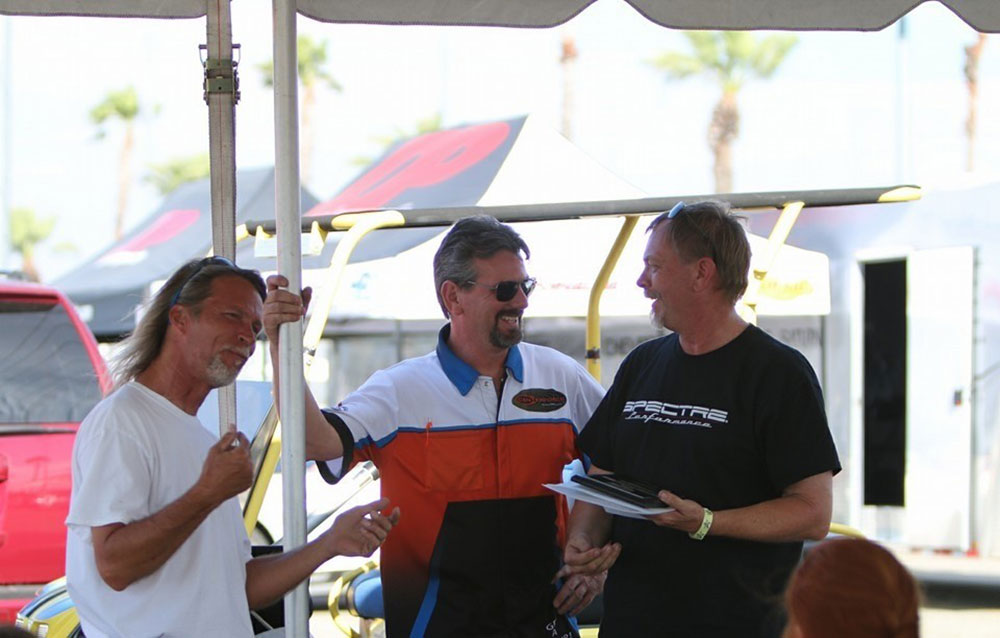
Robert Byrd with Will Baty, of Centerforce Performance Clutches presents Michael Morrow Sundays Spirit of the Event Award at Hotchkis Cup Autocross Challenge

Robert Byrd, together with Will Baty, of Centerforce Performance Clutches presenting Michael Morrow of K&N with Sundays Spirit of the Event Award.

Ask anyone who has ever been to this event, The Racing Byrds, put on one heck of a race. The entertainment Robert Byrd provides makes even the hottest of days nothing short of uber cool! He and wife Trish, have the ability to create a very chill environment.

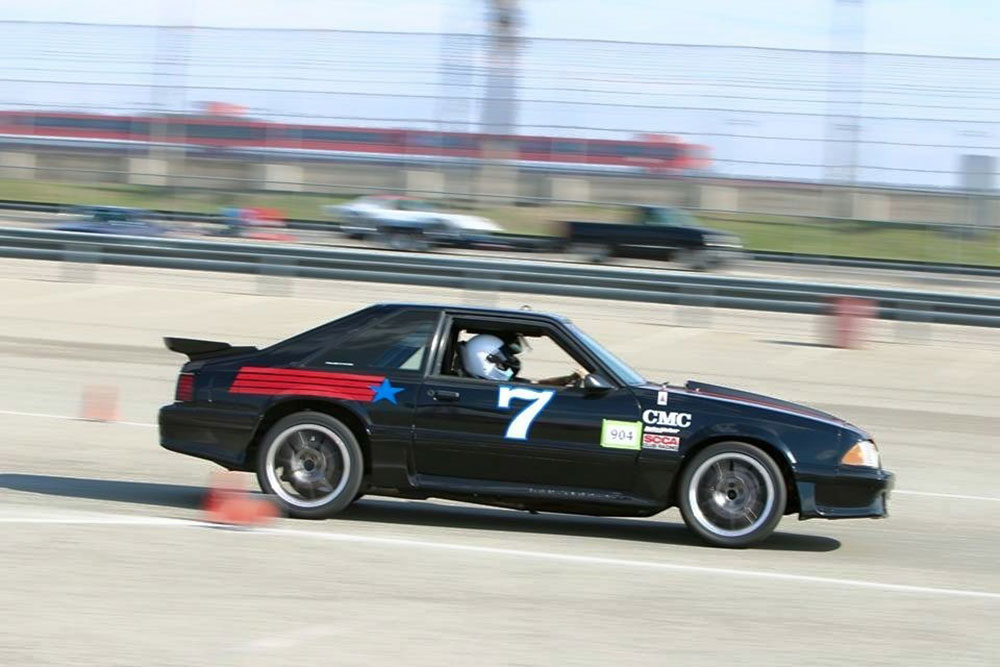
Mike Morrow pushing that newly updated Fox Body Mustang at Hotchkis Cup Autocross Challenge

Mike Morrow pushing that newly updated Fox Body Mustang to the limits in the heat. It's clear he's enjoying the Father's Day surprise presented to him by his daughter, Brandy and son-in-law Rob Phillips.

Not even record breaking heat kept the drivers away from this past weekend's event. In fact, the heat didn't stop the race warriors from laying down some seriously fast times and having fun in the pits.

The Racing Byrds made a special exception due to demand and allowed for an additional 6 participants rounding out the total number of registered entrants to a whopping 81. Participants could choose from racing either Saturday or Sunday or both which makes them eligible for the Hotchkis Cup.

The Hotchkis Cup is an award that recognizes speed, clean driving, and consistency across the entire weekend. The winner of the Cup will be the driver with the lowest combined average lap time for the weekend (average for Saturday + average for Sunday), so the winner may not be the person with the fastest single lap time of the day.

Hotchkis Engineer, Aaron Ogawa, laying down the fastest lap times on Saturday at Hotchkis Cup Autocross Challenge

Hotchkis Engineer, Aaron Ogawa, laying down the fastest lap times on Saturday to earn him a first place finish in the Sports Car Class in his race ready FRS.

Mary Pozzi at Hotchkis Cup Autocross Challenge

12 time SCCA Champ Autocrosser Mary Pozzi picks up a solid second place finish and the award for "Fastest Lady" with her lap time 34.771 just 2/10th's of a second off Aaron Ogawa's super-fast lap time of 34.509!

Mary Pozzi in her Corvette, affectionately named Trouble at Hotchkis Cup Autocross Challenge

Mary Pozzi in her Corvette, affectionately named "Trouble".

Temperatures on the tarmac and in the cars reached well over 100 degrees. The usual suspects were in the house and the most notable rivalry would be that of 5th gen Camaro driver, Don Gonzales and C6 driver, Ryan Thacker. Their rivalry began at the inaugural Hotchkis event. Of course all in good fun because that's what this community is about. Going fast and having fun.

Greg Thurmond in his 1965 Candy Tangerine Corvette with Richard Trujillo in his Deliciously Lime '69 Mustang at Hotchkis Cup Autocross Challenge

All lined up and rearing to go. Greg Thurmond in his 1965 Candy Tangerine Corvette with Richard Trujillo in his Deliciously Lime '69 Mustang nipping at his heals.

Robert Byrd at Hotchkis Cup Autocross Challenge

Robert Byrd, getting as many tips as he can from the weekends fastest guy, Caesar Martinez. Caesar is all smiles as he accepts his awards for first place in the Sports Car Class on Sunday and his award for fastest lap time for the weekend.

Jake Rozelle at Hotchkis Cup Autocross Challenge

Jake Rozelle spending quality time with dad, Roy and little sis, Mallory. Jake earned a second place finish with a lap time of 34.005 just 2/10th's of a second behind Caesar.

Saturday morning started off with an incredible surprise at the driver's meeting. Fellow racers Brandy Phillips and her hubby Rob, had been keeping a secret from dad, Michael Morrow. Turns out that over the past month they had been working on his old SCCA Mustang to get it running again for this event. As a special gift for Father's Day, the kids along with the Racing Byrds, presented him with his race ready ride. To really put the pressure on ole dad, long-time family friend, Matt Briggs, purchased a two-day entry to the event. Mike may have been reluctant to start but by the end of the first run group he appeared to be having the time of his life. Ironically, he received The Spirit of the Event Award sponsored by Centerforce Performance Clutches, an award customarily sponsored by K&N! Happy Father's Day Mike and thank you Rob and Brandy for letting all of us be a part of the surprise!

Jordan Priestley at Hotchkis Cup Autocross Challenge

Jordan Priestley with the hammer down trying to stay out front.

Matt Alcala at Hotchkis Cup Autocross Challenge

Matt Alcala making certain that he pulls out all the stops to be on top in the Modern Muscle class.

Greg Nelson at Hotchkis Cup Autocross Challenge

Greg Nelson putting his demon to the test with Jordan and Matt. Watching these guys run, swapping 1st, 2nd and 3rd was epic.

Greg Nelson at Hotchkis Cup Autocross Challenge

In the end Greg Nelson would be the victor with a lap time of 35.686. But not by much. Matt Alcala put down a lap time of 35.703. That's only 17/1000th's of a second behind Greg Nelson. But Greg proved he's a consistent driver. He took home a first for both days even with the 110 degree temps.

Casey Cronin piloting his 1972 Corvette nicknamed RIF RAFT at Hotchkis Cup Autocross Challenge

Casey Cronin piloting his 1972 Corvette nicknamed RIF RAFT.

Trish Byrd accepting his award for his first place finish in Classic Muscle at Hotchkis Cup Autocross Challenge

Casey seen here with Trish Byrd accepting his award for his first place finish in Classic Muscle.

Caesar Martinez and his 2005 Nissan 350Z at Hotchkis Cup Autocross Challenge

Caesar Martinez and his 2005 Nissan 350Z. This boosted beast complete with Centerforce Dyad Clutch, burned up the track with a scorching fast lap time of 33.723, the fastest lap time of the weekend.

Brandy Phillips at Hotchkis Cup Autocross Challenge

The super-fast and very sweet Brandy Phillips led the truck class all weekend long.

Will Baty from Centerforce Performance Clutches at Hotchkis Cup Autocross Challenge

Support from the sponsors goes beyond your typical customer service as evidenced by Will Baty from Centerforce Performance Clutches. Here he is providing much needed shade for Jane Thurmond as she sits waiting to take on her adversaries.

Marc Lewis of Hedman Hedders at Hotchkis Cup Autocross Challenge

Marc Lewis of Hedman Hedders, another fantastic sponsor of the Hotchkis Cup Autocross Challenge takes a different approach. He pushes his little white 2014 Ford Focus in to beast mode on the track and earned himself a first place finish on Saturday and Sunday.

Kerry Ann Adams driving her 2014 Ford Fiesta at Hotchkis Cup Autocross Challenge

One of the ladies in the event, Kerry Ann Adams, driving her 2014 Ford Fiesta came away Saturday with a second place finish. And Mark Allison in his 2013 Fiat 500 took second place on Sunday.

Greg Thurmond's day in Classic Muscle at Hotchkis Cup Autocross Challenge

Sunday would prove to be Greg Thurmond's day in Classic Muscle. With a lap time of 34.065 he came in first just 9/10th's of a second ahead of wife Jane, whose lap time of 34.926 garnered her a solid second place finish and the award for "Fastest Lady".

Brandy Phillips at Hotchkis Cup Autocross Challenge

Brandy Phillips slithering around the cones, quick and nimble.

Don Ryan at Hotchkis Cup Autocross Challenge

Don ate a little crow at the end of the day when Ryan's fastest time was 2/10th's of a second ahead of Don.

Don Ryan at Hotchkis Cup Autocross Challenge

Ryan gave it all he had but in the end, after a hot weekend of fun and challenges, he lost by less than 2/10ths of a second. Competition is tough, but these guys know, there'll be a next time.

clear

K&N PRODUCT SEARCH     WHERE TO BUY K&N

clear

K&N Filters Offers Dependable, Guaranteed Horsepower with Their Cold Air Intakes

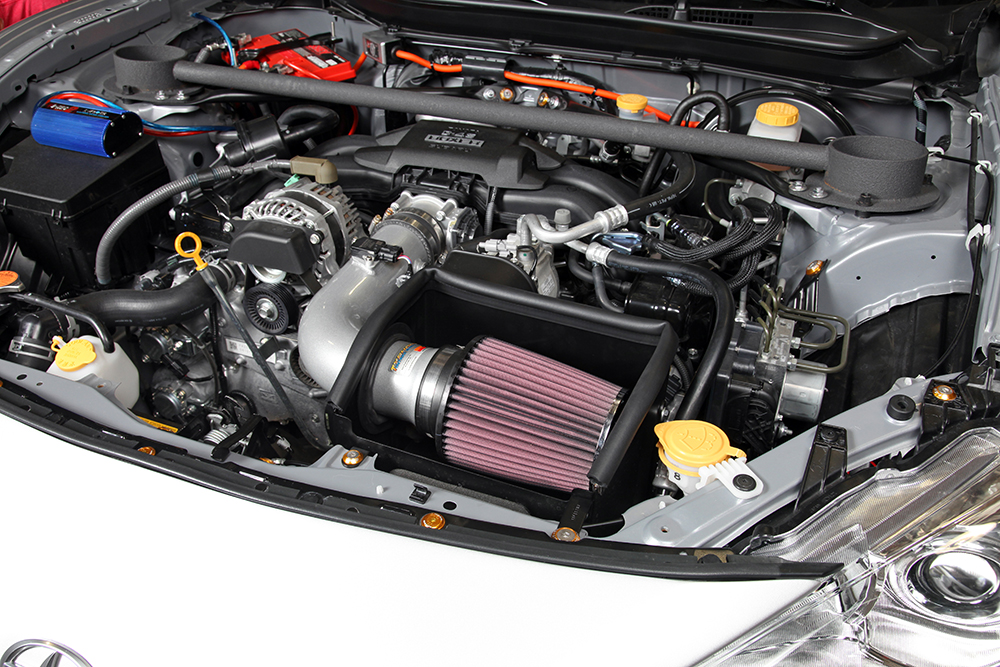
Cold Air Intake Installed

What Does a Cold Air Intake Do?

What Does a Cold Air Intake Do?
In 1969, K&N introduced the very first reusable, high-flow cotton gauze air filter. This revolutionary performance air filter was initially designed for racing, but soon found its way onto countless street cars and custom built hotrods. By the late 80's, fuel injection was becoming the industry standard, so K&N introduced the idea of bolt-on performance air intakes. Like its first high-volume air filter, their new cold air intake systems were proven to significantly increase horsepower and torque, and they quickly became the gold standard for custom car builders, off-roaders, racers, and performance enthusiasts across the globe.

Today, K&N cold air intake systems are the go-to performance upgrade for anybody wanting to get the most horsepower and efficiency from an engine. These bolt-on performance kits are easy to install, and the reusable cotton gauze air filters are warrantied for up to one million miles. But let's look at how they work.

How a Cold Air Intake System Works
The best way to explain a cold air intake system is to think of your car's engine like a pair of lungs. In order to make power, the cylinders have to inhale air to create the explosion that produces wheel-turning horsepower and torque. Since cold air contains more oxygen molecules than warm air, injecting a higher volume of oxygen-rich air into the cylinders allows the engine to burn fuel more completely during the combustion cycle. This "combustion efficiency" results in an increase of horsepower and torque, using roughly the same amount of fuel. Put simply, if you add oxygen to a fire, you get a stronger fire. K&N cold air intake systems are designed to deliver more oxygen-rich cold air into the engine than a stock air intake system. This results in a stronger 'explosion', which contains more force to push the piston down and turn the crankshaft. That extra energy/power is then transferred to the transmission and out to the wheels.

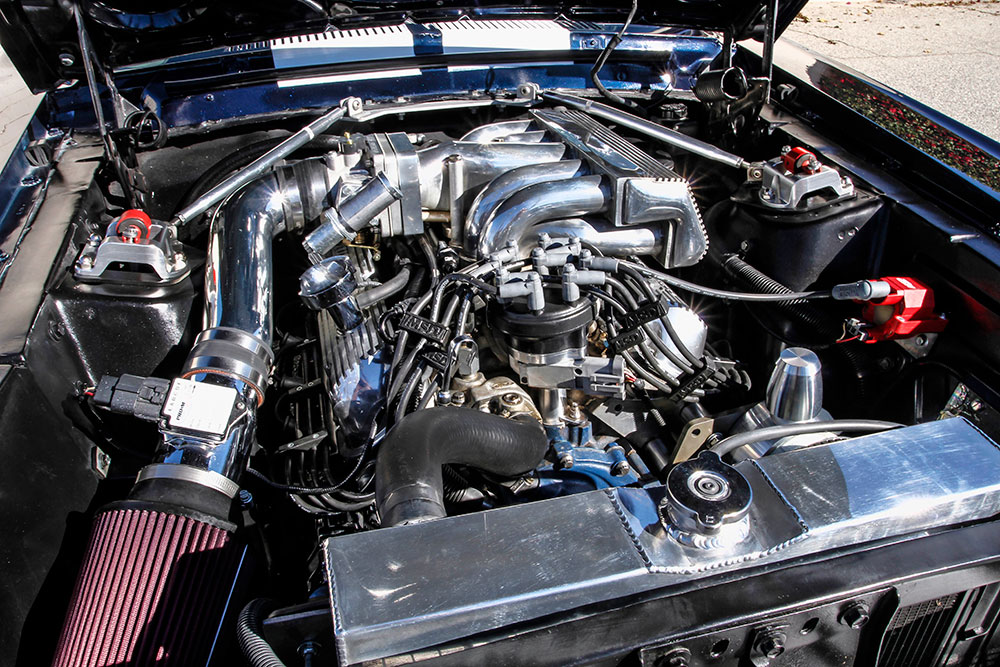
Cold Air Intake 69-8619TS Installed

Cold Air Intake 69-8619TS Installed

O2 = HP
The resulting horsepower gain varies by product and application, but each K&N cold air intake system has been designed to increase airflow efficiency for specific vehicles and their engines. Each of our performance air intake kits undergo thousands of hours of testing to ensure that the high-flow K&N air filter and intake tube is perfectly positioned to collect and deliver the coldest air possible. An engine bay is filled with low-performing warm air, and if the air filter placement is less than ideal (usually due to space limitations), our cold air intake systems will use high temperature heat shields to prevent warm air from entering the system.

Breathing in More Power
Clean air is vital to the performance of not only the engine, but a cold air intake system as well. That's why each K&N performance intake system comes with one of our high-flow cotton gauze air filters. These legendary K&N air filters are made from 4-6 layers of our proprietary cotton gauze material, sandwiched between 2 layers of rugged aluminum mesh. When combined with the unique FilterCharger oil, the cotton fibers are able to attract contaminants that are smaller in diameter than a human hair. This type of filtration is called "depth loading", and it keeps dirt particles trapped within the matrix of cotton fibers, while more air flows through to the engine. K&N air filters typically score 97%-99% filtration efficiency on the ISO 5011 Air Filter Test, which means more air gets into the cylinders, and more contaminants get removed from that air.

Installing a K&N Cold Air Intake System
Thanks to extensive Research & Development, K&N engineers are able to create cold air intake systems that are extremely effective, yet easy to install. Many of our performance intakes can be installed using the factory mounting points, so you typically won't need more than two wrenches and a screwdriver. But regardless of which system you choose, it will come with a step-by-step instruction guide, complete with color photos of each step, and a tool list. Plus, our Technical Support team is just a phone call away.

Cold Air Intake on Dyno

Cold Air Intake on Dyno

Dependability is Guaranteed
Besides increasing horsepower and torque, a K&N cold air intake system will save you time and money. Every K&N air filter can be washed and reused over and over again. So, you won't have to buy a new air filter every 10,000-15,000 thousand miles. Just wash out your K&N filter every 100,000 miles (depending on driving conditions), then re-install it. And, the entire system is backed by the K&N 10-year/Million Mile Limited Warranty, so you get guaranteed performance and guaranteed quality.

Street Legal in All 50 States
Many of the K&N cold air intake systems are completely street legal in all 50 states, and will come with a California Air Resource Board (CARB) Executive Order (EO) number which guarantees that particular air intake kit has been tested to comply with the current emissions standards. EO numbers apply to the kit, as well as to the year, make and model of vehicle that it is being installed on. Intake systems without an EO number are street legal in most states, but cannot be installed on emissions controlled vehicles in the state of California, or other states that have adopted California emission standards. You can use K&N's search by part tool to learn which cold air intakes are CARB exempt, and for which vehicles.

Discover How Much Power You're Missing
We can't guarantee that you will get XX.X more horsepower and foot-pounds of torque, because things like the mileage, modifications and condition of your exact vehicle will factor into the final number. But we can show you the dyno results for a vehicle just like yours, that's been fitted with one of our many K&N cold air intake systems. Plus, we also manufacture lots of other racing and automotive performance parts like high-volume fuel pumps, oil filters, and carbon fiber hood scoops. So to check out what's available for your vehicle, use the K&N search by vehicle tool. Or, you can use the K&N dealer locator to find a K&N dealer near you.

clear

K&N PRODUCT SEARCH     WHERE TO BUY K&N

clear

What Are Cold Air Intakes and How Do They Increase Power and Efficiency?

Cold Air Intake System 101

Cold Air Intake Systems 101

Cold Air Intake System 101
If you have even a casual interest in cars, then you've probably heard that installing a cold air intake system will give your car more power. And that's largely true, but the performance gains ultimately depend on the vehicle, and the type of performance intake system that's being used. A traditional type of performance intake uses a heat shield to prevent the air filter from ingesting warm engine bay air. This type of system can increase performance, by simply changing the quality of air going into the engine. But there's nothing 'simple' about engineering one of these cold air intake systems.

Why cold air is so important?
Fire can't exist in a vacuum, because it needs oxygen to fuel itself. So before the spark plugs can ignite the gasoline, the valves have to allow air into each cylinder. This oxygen is fed to the throttle body through an air intake system, which pulls air from a high-pressure zone, typically located at the front of the hot engine bay. Although this air is usually fairly cool, it can heat up as it travels through the intake tube. This reduces its potency, and causes power to be lost during each combustion cycle.

If you think back to 7th grade science class, you may remember that cold air has a higher density than warm air, because it contains more oxygen molecules. And since horsepower comes from the intensity of each fuel detonation, increasing the volume of oxygen in the fuel/air mixture will cause the fuel to burn more intensely. In laymen's terms, adding more cold air/oxygen will make the gas burn hotter, which will create more power. Following that simple horsepower formula has allowed K&N cold air intake systems to become one of the most popular performance upgrades on the market today.

Factory air intake systems
When car company engineers develop an air intake system, they have to factor in things like noise suppression, emission regulations, and the amount of room they have to work with (often referred to as 'packaging'). To meet the performance objectives for a particular model, they'll study the air temperature and air pressure zones under the hood. The air box is then placed in a low temperature zone, and the air box inlet is positioned in a high-pressure area, so it can collect cool outside air as flows through the bodywork. And finally, a sealed lid is used to keep the air filter from ingesting hot air coming off the engine. Factory air intakes might limit engine performance, but a lot of science goes into choosing that air box location.

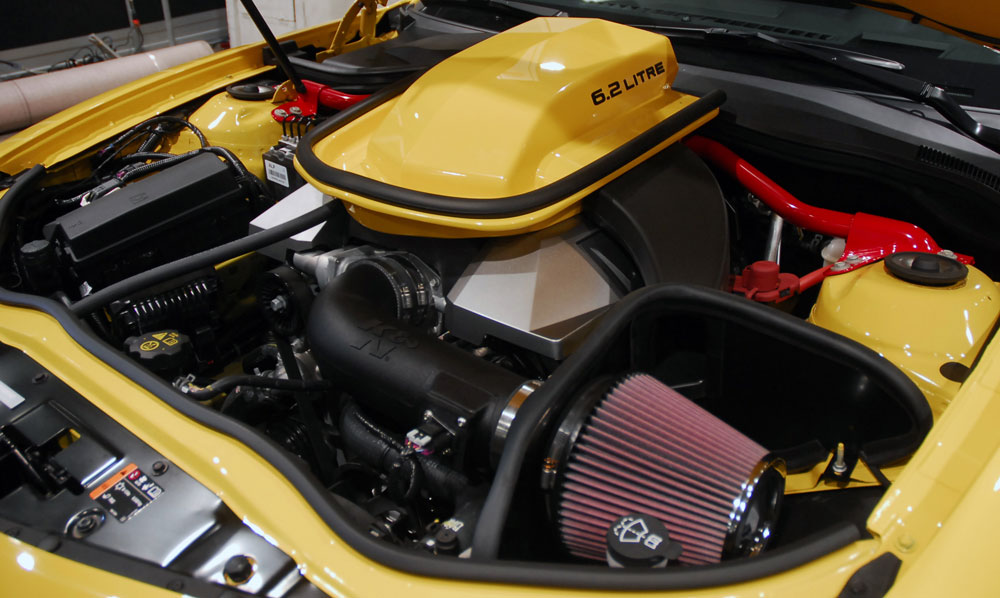
Cold air intake system installed

K&N Cold air intake system installed

Classic cold air intake systems
Since the OEM air box is usually located in a low-temperature, high-pressure zone. Cold air intake systems can increase horsepower by replacing the restrictive stock intake, with components that are designed to handle a much larger volume of air. To ensure all that extra oxygen is cold, a low-restriction K&N performance air filter is positioned where the stock air box used to be. A rugged heat shield is then placed around the oversized air filter, to prevent hot engine air from getting into the system. The shape of the heat shield is specifically engineered to funnel cold air from that high pressure zone, directly into the air filter. While the outer edges of the K&N heat shield are often fitted with a special gasket, thus sealing against the underside of the hood to control the temperature and pressure of the air entering the system. This allows a K&N cold air intake system to boost performance, by simply improving on the factory design.

Choosing the right cold air intake system
Besides the performance benefits, legality is something that you need to consider. The California Air Resources Board (CARB) has very strict rules about performance intake systems. Many high performance cold air intake systems are not street legal in California, or any other state that has adopted California Emissions Standards. The K&N 57-Series FIPK performance intake systems on the other hand, is completely street legal in all 50 states, and it even comes with a CARB EO (executive order) number to comply with smog inspection.

K&N cold air intake systems mount the air cleaner high above the road surface. So engine performance won't be effected by the weather, or environmental conditions. But if you are concerned about those type of issues, K&N offers a water repellant DryCharger filter wrap. To find out which K&N cold air intake systems will fit your ride, use the search by vehicle tool, or use the dealer search tool to find a K&N dealer near you.

clear

K&N PRODUCT SEARCH     WHERE TO BUY K&N

clear

Do Cold Air Intakes Really Work?

Do cold air intake systems work

Do cold air intake systems work?

Cold air intake systems have long been considered one of the easiest ways to "bolt-on extra horsepower". All you have to do is unbolt the restrictive factory intake system, and replace it with a free-flowing cold air intake system. This will theoretically give you lots of additional horsepower, so you can become a Fast & Furious stoplight hero. However, installing a K&N cold air intake isn't going to turn you into Paul Walker. But it will definitely make your ride a lot more powerful. So let's take a look at how, and why a cold air intake system works...

How an engine makes power
An internal combustion engine works by burning a mixture of fuel and air inside of the cylinders. The fuel injectors spray in a precise amount of fuel, which gets mixed with air delivered by the air intake system. A spark plug then ignites this volatile cocktail, causing an explosion that forces the piston downward, turning the crankshaft, and ultimately the wheels. The piston-moving force that's created during the combustion cycle is where horsepower comes from. And you can actually increase that force/horsepower by adding a K&N cold air intake system.

Cold air intake system installed

K&N cold air intake system installed

Why cold air is so important
When you were in school, you learned that cold air is denser than warm air, because it contains additional oxygen molecules. When you feed a fire/explosion with oxygen-rich cold air, the resulting fire/explosion will be much more intense. A factory air intake tends to feed less-potent warm air to the cylinders, which means less energy/horsepower gets extracted from the fuel. A cold air intake system on the other hand, gives the engine more oxygen to work with. So those explosions become more intense, and the engine effectively makes more horsepower, from the same amount of fuel.

How a factory air intake works
In order to get to the cylinders, air has to first enter a tiny hole at the bottom of the stock airbox, then it has to pass through a thick paper air filter. As dirt collects on the OEM air filter, less air can pass through, which causes the engine to work harder to make the same amount of horsepower. Once the air has cleared this hurdle, it gets forced through a series of narrow plastic tubes with tight bends and uneven surfaces. This causes the air to swirl around and become turbulent, and that makes it heat up and become less effective.

How a cold air intake system works
On a cold air intake system, air first passes through a much larger performance air filter, which allows more air into the system. Filters like the K&N performance air filter, use a 'depth loading' design to remove more dirt from the air, then keep it trapped inside a matrix of sticky cotton fibers, which allows a high volume of air to always be able to pass through. Once the air has been cleaned, it flows into a wider intake tube that typically has completely smooth interior surfaces, and less restrictive curves. K&N aluminum intake tubes use mandrel-bent curves to virtually eliminate air turbulence, while K&N roto-molded intake tubes do the same thing with molded high density polyethylene.

Air intake systems installed

Air intake systems installed

By reducing airflow restrictions, a cold air intake system can always feed the engine a high volume of turbulence-free air. And to make sure the air is cold, the air filter is situated so that it can collect the coldest air. Which often requires a special heat shield to prevent warm engine bay air from entering the system. However, a front mounted ram air intake will relocate the air filter to a high-pressure zone outside of the engine compartment (usually behind the front bumper, or inside the fender well). This allows it to collect the coldest air possible, and the increased air pressure forces more air into the system as the speed increases. Thanks to the improved airflow dynamics, a front mounted cold air intake system is able to deliver more horsepower than a conventional performance intake.

So does a cold air intake system really work?
When you introduce a high volume of cold air to the combustion process, the engine is able to burn the fuel more completely, and that results in additional horsepower. So yes, a cold air intake system does work. But the actual amount of extra horsepower that you'll get from a K&N cold air intake, will depend on the type of system, as well as the condition of your specific vehicle and engine. You can however, check out the dyno test results for different K&N intake systems that are installed on a vehicle just like yours.

To find out the estimated horsepower gain for your vehicle, use K&N's Search by Vehicle tool.

clear

K&N PRODUCT SEARCH     WHERE TO BUY K&N

clear

Chase Elliott Wins K&N Pro Series West Race at Sonoma Raceway in California

Chase Elliott won the pole for the NASCAR K&N Pro Series West race at Sonoma Raceway in California

Chase Elliott won the pole for the NASCAR K&N Pro Series West race at Sonoma Raceway in California.

Looking to gain some experience on the Sonoma Raceway road course, Chase Elliott won the NASCAR K&N Pro Series West race on the Northern California track. The NASCAR Sprint Cup Series rookie led the last three laps of the race passing Noah Gragson on lap 62 in the Chevys Fresh Mex 200.

Chase Elliott at K&N Pro Series West race at Sonoma Raceway in California

Chase Elliott, a rookie in the NASCAR Sprint Cup Series, made his first start of 2016 in the K&N Pro Series West race at Sonoma Raceway in California.

"It was a fun race," said Elliott, who won his first K&N Pro Series East race at Iowa Speedway in 2012. "I'm glad we came out to do this." He was selected by fans as the most popular driver in the K&N Pro Series East in 2011 and 2012.

Elliot, who drives the No. 24 Chevrolet for Hendrick Motor Sports in the Sprint Cup Series, was 21st in the Cup race at Sonoma Raceway. Gragson posted his third top-five finishes in six NASCAR K&N Pro Series West races. It was his second podium finish in the past two K&N Pro Series West races.

Chase Elliott winning NASCAR K&N Pro Series West race at Sonoma Raceway

Chase Elliott won the NASCAR K&N Pro Series West race at Sonoma Raceway in his first start of the season.

"This was an experience of a lifetime to race against someone like Chase Elliott," said Gragson, who is one of the NASCAR Next drivers. "I knew Chase probably had the best car, but I also knew I had a car that could win. I learned so much out there today. This will only help me become a better racer."

Elliott won the pole but Ryan Partridge led the first seven laps of the race. Gragson led for 34 laps, the most in the race. He took the lead from Gracin Raz on lap 26 for seven laps, and again from Raz a lap later for six more laps. Gragson was out front from lap 43 to 61. Elliott passed Gragson on lap 62 and took the checkered flag.

Chase Elliott leading the pack NASCAR K&N Pro Series West at Sonoma Raceway in California

Chase Elliott leads the pack through the road course during the NASCAR K&N Pro Series West at Sonoma Raceway in California.

"More than anything I felt they were running a little bit harder than I wanted to run at that point in the race," Elliott said. "I didn't want those guys to push me any harder than what I was going. I felt like it was such a long ways to go. They were all kind of racing kind of hard, I felt like, kind of rooting each other up along the way. I really didn't want any part of that. Let them do their thing and race, do whatever they wanted to do. Try to put our focus on when it mattered."

Chase Elliott leads last three laps and won the NASCAR K&N Pro Series West race at Sonoma Raceway in California

Chase Elliott led the last three laps and won the NASCAR K&N Pro Series West race at Sonoma Raceway in California.

Raz crossed the finish line in third, followed by Partridge in fourth and Riley Herbst in fifth.

"It's hard to focus on what's in front of your when there is so much going on behind you," Raz said. "We really tried to focus on just taking one corner at a time, hitting all my marks, not wheel hopping or overdriving the corners. Just keeping your composure there was really a task, but not something my team couldn't help me with."

Partridge leads the K&N Pro Series West standings after six races. He has a 15-point lead over Todd Gilliland, who was 24th in the Sonoma race. The start of the race was rough. A four-car crash on the opening lap knocked two of the K&N Pro Series West championship contenders to the pits. Gilliland and his Bill McAnally Racing teammate Chris Eggleston, the reigning K&N Pro Series West champion, were involved in the opening-lap collision. It turned into a 26th place finish for Eggleston, who completed 34 of the 64 laps. Gilliland completed 41 laps.

The next K&N Pro Series West race is at Stateline Speedway in Idaho on July 9.

clear

K&N PRODUCT SEARCH     WHERE TO BUY K&N

clear